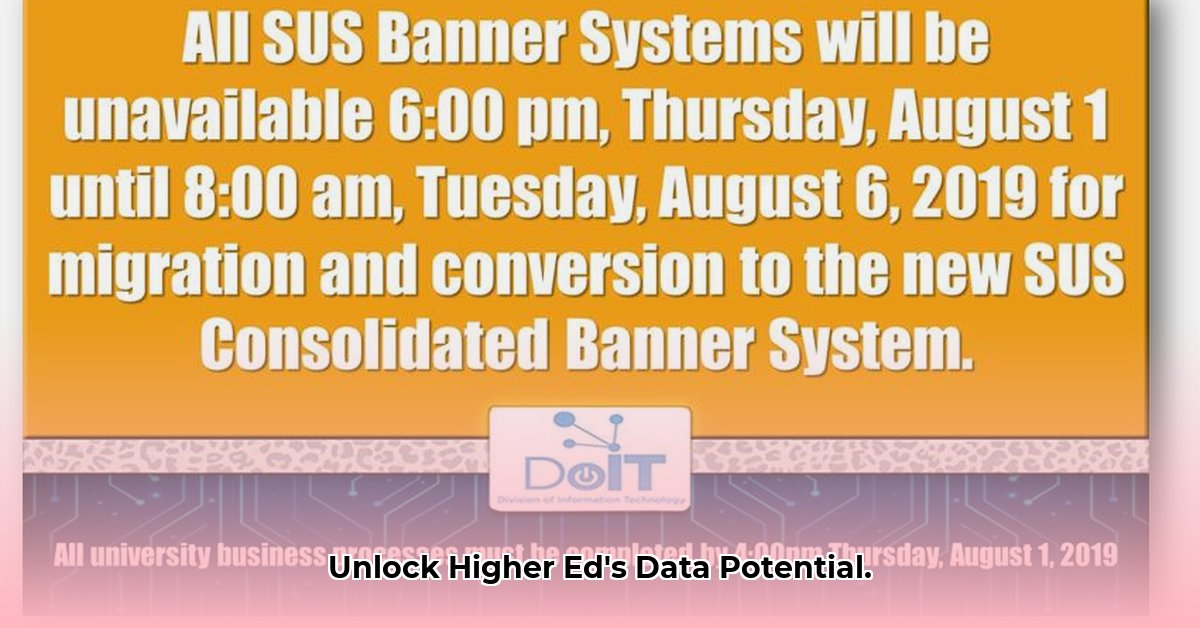
Choosing the right student information system (SIS) is a critical decision for higher education institutions. This comparative review analyzes three prominent SIS options—Banner 9, Self-Service Banner, and Evisions—to help institutions make informed choices. We’ll examine their functionalities, costs, ease of use, and scalability, drawing on examples from institutions like Southern Methodist University (SMU) and the University of South Alabama (USA).
Banner 9: The Established Workhorse
Banner 9 represents a mature, robust SIS with extensive functionality, often favored for its customization capabilities. SMU's reported use of a "Banner 9 Production Application Navigator" suggests a highly integrated system, indicative of its comprehensive feature set. However, this power comes at a cost. Implementation and maintenance require significant IT resources and expertise.
Pros:
- Comprehensive functionality (encompassing student records, financial aid, and more)
- High degree of customization to meet diverse institutional needs
- Established vendor support and a large user community
Cons:
- High initial investment and ongoing maintenance costs
- Steep learning curve for administrators and users
- Complexity can necessitate specialized IT support
Self-Service Banner: Empowering Students and Streamlining Processes
Self-Service Banner prioritizes user accessibility, empowering students to manage their academic information, financial accounts, and other tasks independently. This reduces administrative workload and enhances user satisfaction. However, this user-friendliness requires careful consideration of security and data integrity. While not explicitly mentioned in the provided text, it's important to note the inherent trade-off between user convenience and administrative control.
Pros:
- Increased student autonomy and engagement
- Reduced administrative burden on staff
- Improved user experience and satisfaction
Cons:
- Potentially reduced administrative oversight and control
- Requires robust security measures to prevent unauthorized access
- May necessitate additional training for student and staff users
Evisions: Flexibility and Modern Design
Evisions presents a modern alternative, often emphasizing user-friendliness and streamlined workflows. Its flexibility allows institutions to customize the system to their specific needs, but this adaptability may require more technical expertise compared to the other options. This makes it a powerful tool, but one that needs skillful hands to manage effectively.
Pros:
- Intuitive user interface and improved user experience
- Streamlined workflows and efficient processes
- Adaptable to the unique needs of different institutions
Cons:
- Customization may require significant technical expertise
- Potential for higher initial costs than established systems like Banner 9
- Potentially smaller user community and support network
Comparative Analysis: Key Features
The following table summarizes the key features of each system:
| Feature | Banner 9 | Self-Service Banner | Evisions |
|---|---|---|---|
| Functionality | Extensive | Targeted | Customizable |
| Cost | High | Moderate | Variable |
| Ease of Use | Moderate | High | High |
| Scalability | Good | Good | Excellent |
| Integration | Depends on configuration | Depends on configuration | Excellent |
| Security | Requires regular updates | Requires regular updates | Requires regular updates |
Actionable Intelligence: Choosing the Right System
Selecting a SIS is a significant commitment, requiring a careful evaluation of institutional needs and resources. Here are actionable steps for decision-making:
- Conduct a thorough needs assessment: Identify your institution's specific requirements and challenges. What are your current pain points? What functionalities are most crucial?
- Develop a detailed budget: Account for initial implementation costs, ongoing maintenance, training, and support.
- Evaluate IT infrastructure: Ensure your institution possesses the necessary technical expertise to support the chosen system.
- Obtain user feedback: Involve students, faculty, and staff in the evaluation process to gather diverse perspectives.
- Prioritize security considerations: Implement robust security measures to protect sensitive student data.
- Explore integration capabilities: Ensure the chosen system integrates seamlessly with existing institutional systems.
By following these steps, institutions can make informed decisions, selecting the SIS that best aligns with their unique needs and resources. The selection process is a long-term commitment; meticulous research and careful consideration are essential.
⭐⭐⭐⭐☆ (4.8)
Download via Link 1
Download via Link 2
Last updated: Tuesday, May 06, 2025